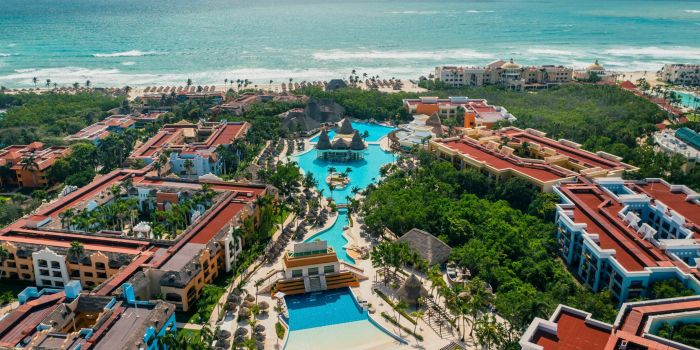
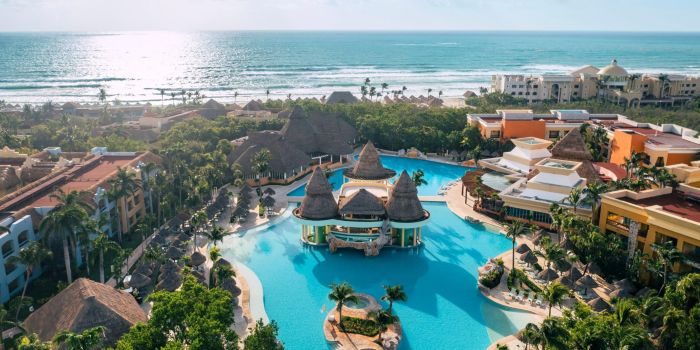
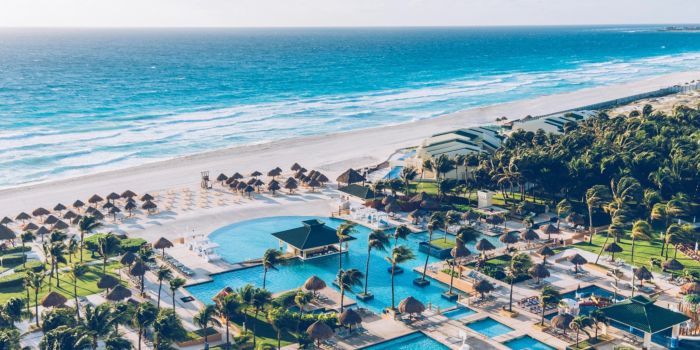
Mexico's headline landmarks include Chichén Itzá and Teotihuacán, ancient cities that anchor most first visits to the country's cultural and historical sites. Chichén Itzá pairs naturally with a base in Mérida and the wider Yucatán, which keeps the region's Maya heritage within comfortable reach. On the Caribbean side, turquoise water and white-sand beaches stretch through Cancún, the Riviera Maya, and Tulum, the country's best-known coastal corridor. On the Pacific side, stroll Puerto Vallarta's malecón at sunset, surf the breaks at Sayulita, or slow down in the laid-back coastal towns of Nayarit. Around Oaxaca, day trips reach the Zapotec ruins at Monte Albán and the petrified mineral waterfalls at Hierve el Agua, two of the region's signature excursions. North of the city, a network of highland Zapotec villages offers hiking trails and community-based ecotourism for travelers who want time in the mountains. In Mexico City, wander between Roma's cafés, Condesa's leafy streets, and the landmark architecture of the Centro Histórico for a full day of neighborhood exploring. Nature and adventure run the length of the country, with jungle hikes and mountain landscapes stretching from the Riviera Maya to Nayarit.
Family Activities in Mexico
Mexico treats family exploration as a core trip type, and the Caribbean coast is the easiest place to build a trip around children. Cancún, the Riviera Maya, and Tulum suit family beach trips especially well, with beach days that flex easily around naps and shorter attention spans. Cenote swims add a refreshing change of pace along the same coast, and they remain one of the region's most memorable activities for kids. The Cancún area also concentrates attractions suited to families and young adventurers, led by the eco-parks at Xcaret and Xel-Há. The El Rey Ruins sit in the same area, and they give children a manageable first archaeological site during a beach vacation.
Dining in Mexico
Regional cooking defines the country, and the specialties change noticeably as you move between Oaxaca, Mexico City, Puebla, and Guadalajara. Oaxaca is the standout food destination, renowned for seven distinct moles, with the dark, complex mole negro the most celebrated of the family. Look also for tlayudas, the large crispy tortillas topped with beans and cheese, and chapulines, toasted grasshoppers seasoned with chile and lime. Oaxaca's markets carry the food culture as much as any restaurant does. The Mercado 20 de Noviembre is famous for its pasillo de humo, the smoke alley where grilled meats are cooked to order for waiting customers. The nearby Mercado Benito Juárez is the place for produce, cheese, and chocolate, and it rounds out a market crawl through the city center. Local comedores inside the markets serve some of the most authentic plates in the city, which makes a market lunch worth planning. Oaxaca is also the global capital of mezcal, producing roughly 90 percent of the country's supply, and guided mezcalería tastings introduce the different agave varieties. Beyond Oaxaca, Puebla built its reputation on street food, and Guadalajara earns its place through traditional dishes that reward an unhurried lunch. In Mexico City, Polanco is known for its culinary scene, and the city overall runs the full range from street food to fine dining.
Getting Around Mexico
Mexico's major international entry points are Mexico City Benito Juárez (MEX), Cancún (CUN), Los Cabos (SJD), Guadalajara (GDL), and Monterrey (MTY). Direct flights connect these hubs with the country's other top cities, so travelers combining two regions often fly between them rather than drive. Intercity buses cover routes between major cities and smaller destinations, and driving suits travelers who want to link nearby cities within a single region. Smaller cultural hubs have their own airports as well, and Oaxaca-Xoxocotlán International (OAX) sits about seven kilometers from that city's center. Regional airports at Mazatlán (MZT), León (BJX), Acapulco (ACA), and Ixtapa (ZIH) connect travelers to Pacific beach towns and the colonial cities of the central highlands. In the surrounding valley, taxis and shared vans known as colectivos handle local trips, while organized tours reach outlying attractions efficiently without a rental car.